ServicesRoof Replacement
Roof Replacement in Keystone Heights, Laid Out Step by Step
Replacing a roof costs real money, so you should know exactly what you're paying for. We check your roof, give you a straight answer on whether it's time, explain shingle and metal options in everyday words, and break down the price line by line.
When a New Roof Is the Right Call
Asphalt roofs age a little at a time. The grit wears away, the seal strips let go, and leaks begin popping up in one room, then another. At some point, the cost of repeated patches outgrows the cost of a new roof. That's when we raise the idea of replacing it.
If your roof isn't there yet, we'll say so. When a roof repair can buy you several more solid years, we tell you that and why. When the shingles are thin all over or the wood beneath has softened, we show you the photos and what they mean for your house.
Our long, hot summers and afternoon storms wear shingles out sooner than in cooler climates. So we judge a roof by how it's holding up, not only by the year it was installed.
What Comes With Your New Roof
Full tear-off to bare wood
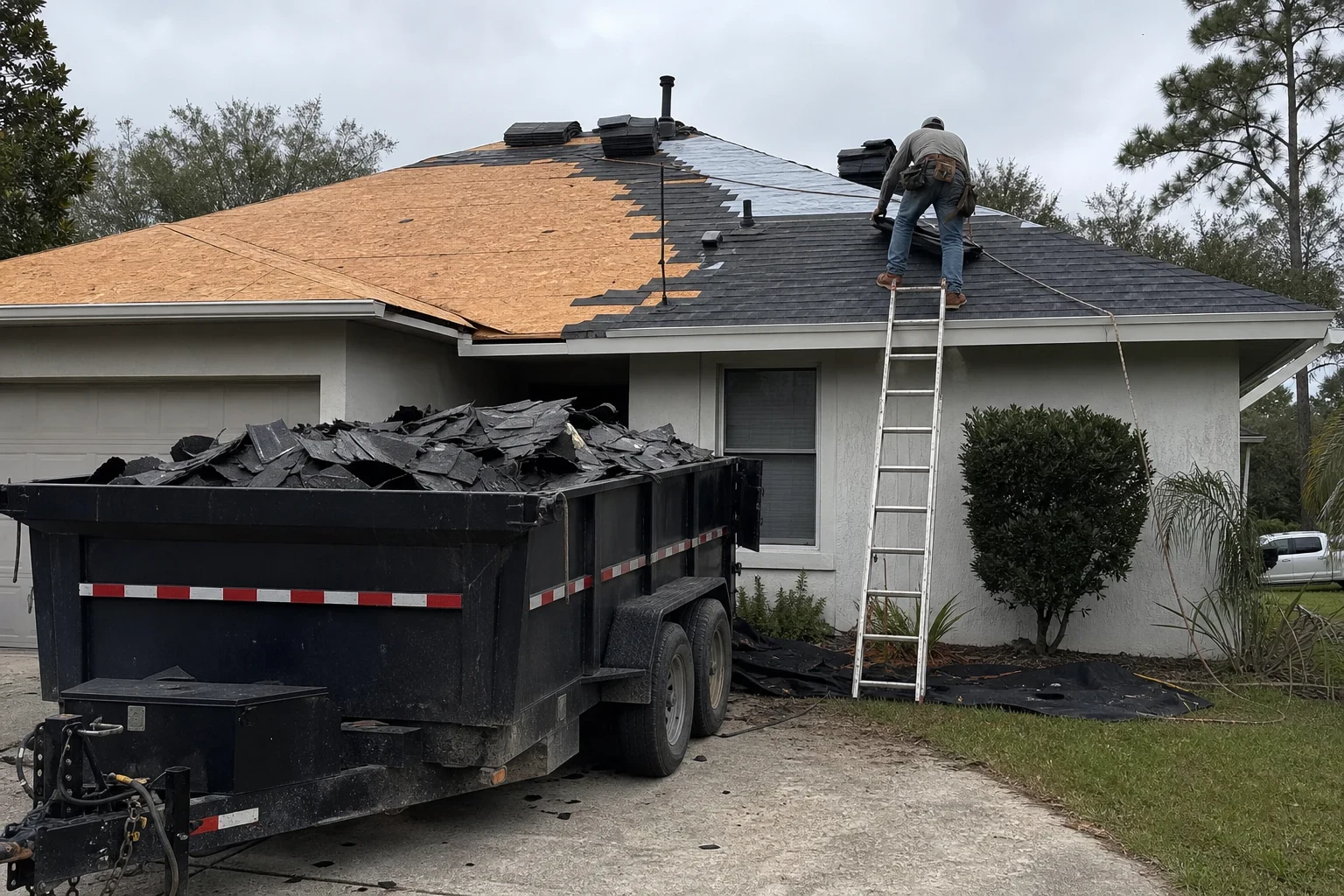
We remove all the shingles and the old underlayment. New shingles never go over old ones with us, since that hides rot and traps heat on the deck.
Decking checked board by board
Once the wood is bare, we walk each section and flag soft or rotten boards. You see every board we flag, and those are the only ones we replace.
New underlayment and backup barrier
A secondary water barrier that meets the Florida Building Code goes down beneath the shingles. If wind ever lifts a shingle, it keeps water out.
Fresh metal where leaks start
Water usually gets in at valleys, walls, chimneys, roof edges and plumbing pipes. Those spots get new flashing, drip edge and pipe boots, not reused pieces, and we check that the attic is getting enough air.
Installed the GAF way
As a GAF Certified Installer, our crew uses GAF's own steps to install its shingles and parts on your house. It shows in how the nails are placed and how the details are finished.
Every last nail picked up
All debris goes into the dumpster and leaves with us. Before we go, a magnet sweeper runs over the lawn, beds and driveway so loose nails don't find a tire or a bare foot.
Signs Your Roof Is Wearing Out
Grit piling up at the downspouts
That sand-like material is the shingles' protective coating. When a lot of it washes out, the shingles underneath are thinning.
Shingle edges lifting or cracking
Shingles that curl at the corners or split across the middle can't lie flat anymore. Wind catches them and pulls them loose.
Water stains in several rooms
A single stain often traces back to one spot we can fix. Stains spread across the house usually mean the whole roof is tired.
A roofline that dips
Look at your roof from the street. A wavy or sagging line between rafters can mean the deck boards are rotting and need attention soon.
Questions from your insurance company
Many Florida insurers look hard at older roofs at renewal time. If you got a letter about yours, a roof inspection gives you facts to work with.
What Happens From Estimate to Final Walk
- 1
Free estimate at your home
We get up on the roof, look in the attic if there's access, and take pictures as we go. Back on the ground, you see those pictures, we talk through your options, and you get a written price.
- 2
Permit and material order
We pull the permit and order your shingles or metal panels. You get a start date ahead of time, not a surprise knock at the door.
- 3
Day one: tear-off
Tarps go over shrubs and plywood goes down where the dumpster sits. Then the old roof comes off, and any bad decking is replaced before the day ends so your home isn't left exposed.
- 4
Building the new roof
Water barrier first, then flashing and vents, then shingles from the eaves up to the ridge. Plan on one to three days for a typical house, longer if it's large or the weather turns.
- 5
Walk-through and permit sign-off
After the nail sweep, we walk the finished roof with you and answer your questions. The building inspector then checks the work and closes out the permit.
What Drives the Cost
Every roof prices out differently. Your written estimate breaks the job into separate lines so you can see what each part costs. These are the items that move the total the most.
- How big and how steep
- A larger roof takes more shingles, more underlayment and more labor. On a steep roof the crew moves slower and has to set up extra harnesses and roof jacks before work starts.
- Number of old layers
- Some older homes have a second layer of shingles under the visible one. Stripping both takes more labor and leaves more debris to haul off.
- Rot you can't see yet
- Damaged wood only comes to light after the shingles are off. Your estimate gives a price per sheet for new boards, so you know the cost of any extra wood up front.
- Shingles versus metal
- Architectural shingles and metal roofing differ in what they cost to put on and in how long they last. We lay them out together so you can weigh them.
- Parts the code requires
- Passing inspection takes the permit, new flashing, drip edge and venting. These are in your estimate from day one, not added at the end.
What People Ask About a New Roof
Something not covered here? (904) 320-2386
How long does a roof replacement take?
Most houses take one to three days. A bigger or steeper roof, or lots of rotten wood, can add time. If an afternoon storm moves in, we stop, close up the roof and start again the next morning, and we keep you updated.
Can you lay new shingles on top of the old ones?
We don't install overlays. A second layer covers up soft decking and old flashing, puts more weight on your framing and holds in heat. Stripping the old roof lets us find what's underneath and fix it.
Does insurance pay for a new roof?
Most policies cover storm damage, not a roof that wore out with age. If wind or hail did the harm, we can meet your adjuster in person and go through our photos. Your insurer decides coverage, and our storm damage repair page has more on how that works.
Should I go with shingles or metal?
Shingles are cheaper to install. Metal costs more up front, lasts longer and handles heat and wind well. We compare both for your house and budget, and our metal roofing page goes into more detail.
Can I finance a new roof?
Yes, we have financing available. Ask during your estimate and we'll walk you through it.
Do I have to be home during the work?
No, carry on with your day. It's helpful to see us the first morning and again at the final walk. On tear-off day, keep pets indoors and get the cars out of the driveway.
See Your Roof Options Before You Decide
We'll inspect your roof, go through the photos with you and lay out what each option means. The estimate is free, and you're under no obligation.