ServicesRoof Repair
Roof Repair in Keystone Heights, Explained Before We Fix It
Most leaks start at one small spot: a cracked pipe boot, a loose flashing seam, a few shingles the wind lifted. We find that spot, show you photos, tell you what it means in everyday words, then fix it so it stays fixed.
When Fixing Beats Replacing
Fixing one section is the smart move when most of the roof is still sound and the trouble stays in one area. That might be a leak around a vent, a patch of missing shingles or a soft spot near a chimney. If the rest of the roof still has years left, a repair costs less and gets done faster.
We tell you straight when a repair won't hold. If the shingles are brittle all over, or the decking is soft in several places, patching just buys a few months. Then we'll walk you through roof replacement instead, and you decide.
The goal is simple. You should know what failed, why it failed and what each option costs before anyone climbs a ladder with materials.
What Our Roof Repair Work Covers
- Finding the real entry point
- Water runs along the decking before it drips through your ceiling, so the stain inside is rarely right under the hole. We trace it back from the attic and from the roof until we find where it gets in.
- Shingle replacement
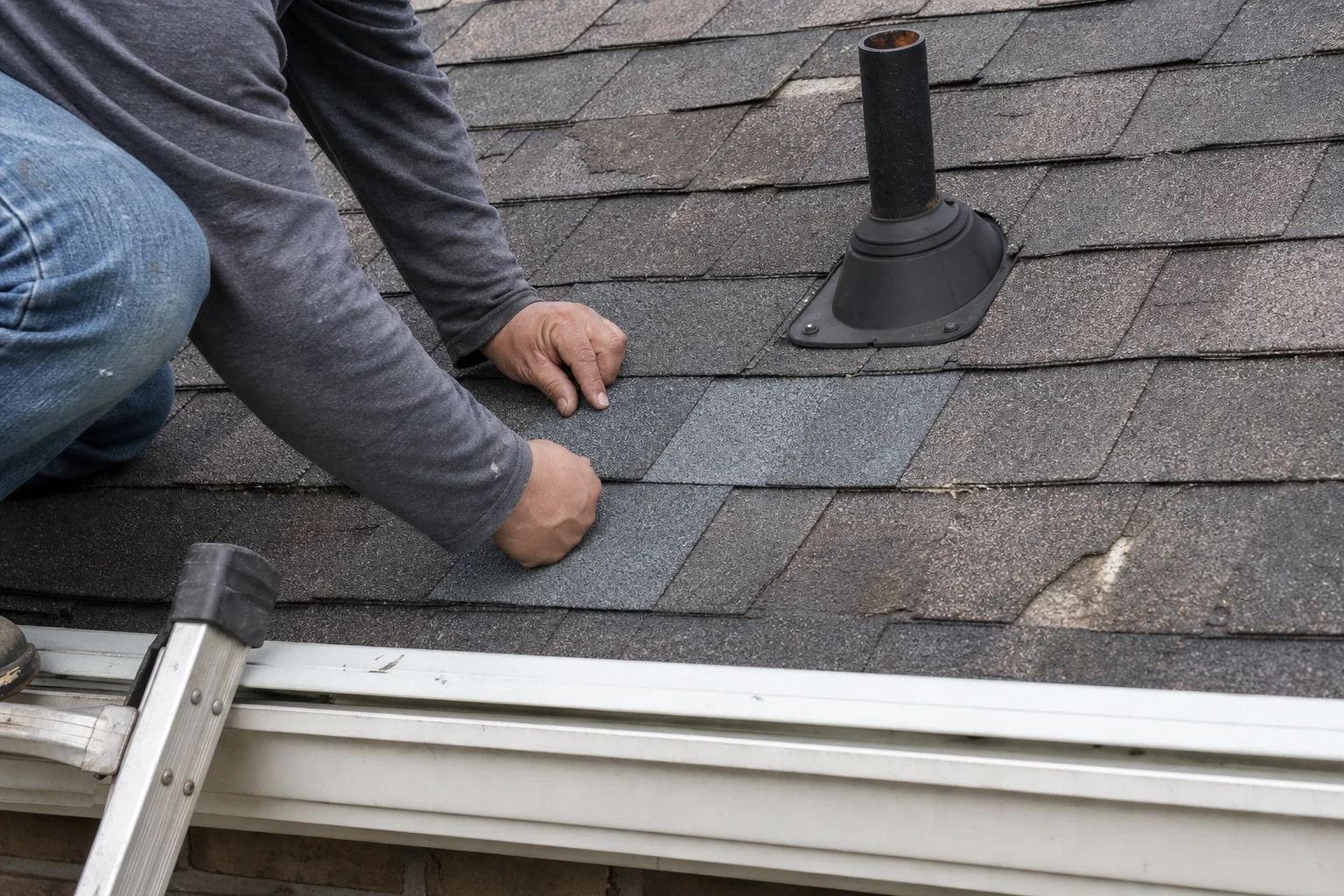
- We replace torn, cracked or missing shingles and match them as closely as we can. New shingles get nailed in the right spot and sealed down so the next storm doesn't lift them.
- Flashing and pipe boots
- The metal around chimneys, walls and valleys, and the rubber boots around plumbing vents, fail long before shingles do. Florida sun dries rubber out and cracks it. We reseal or replace these parts instead of smearing caulk over them.
- Decking under the damage
- If water has been getting in a while, the plywood underneath can rot. We check it once the shingles are off and replace soft sections so the new work has something solid to hold.
- Installer habits on small jobs
- We're a GAF Certified Installer. We bring the same habits from full roofs to small repairs: proper nail placement, real underlayment and flashing done by the book.
Signs Your Roof Needs a Repair
Brown stains on the ceiling
A ring that grows after each rain means water is reaching the drywall. It also means insulation and decking above it are getting wet.
Shingles in the yard
After a summer thunderstorm, check the lawn and driveway. Even one or two shingles means a bare spot is open to the next rain.
Grit piling up in the gutters
The sandy top layer on a shingle is what blocks the sun. As the roof ages, that layer washes loose, and a light dusting after rain is normal. A thick bed of it in the gutters or at the foot of a downspout means the shingles are wearing thin.
Damp or musty attic
Wet insulation, dark streaks on the rafters or a mildew smell up there usually mean water has been creeping in for a while. It often shows in the attic well before it ever stains a ceiling.
Lifted or curled edges
Shingles that curl at the corners or flap in the wind have lost their seal. Wind gets under them and tears them off.
What Moves the Price of a Repair
Every repair is priced after we've seen the roof, not over the phone. The size of the damaged area matters, but what we find underneath often matters more. We go over each line with you before work starts, so the bill holds no surprises. Financing is available if you need it.
How far the water got
A leak caught early may only need new shingles and a boot. One that ran for months can mean new decking and insulation.
Where the damage sits
A steep pitch, a second story or a spot around a chimney or valley takes more time and safety gear to work on.
Matching materials
Common shingles are easy to match. Older or discontinued styles take more effort to find a close color and profile.
Flashing work
Resealing a pipe boot is quick. Rebuilding flashing along a wall or chimney means removing and relaying the shingles around it.
How a Repair Visit Goes
- 1
Start with a phone call
Let us know what you've noticed and roughly where on your home it shows up. We pick a time that works for you and come out for a free estimate.
- 2
We look and take photos
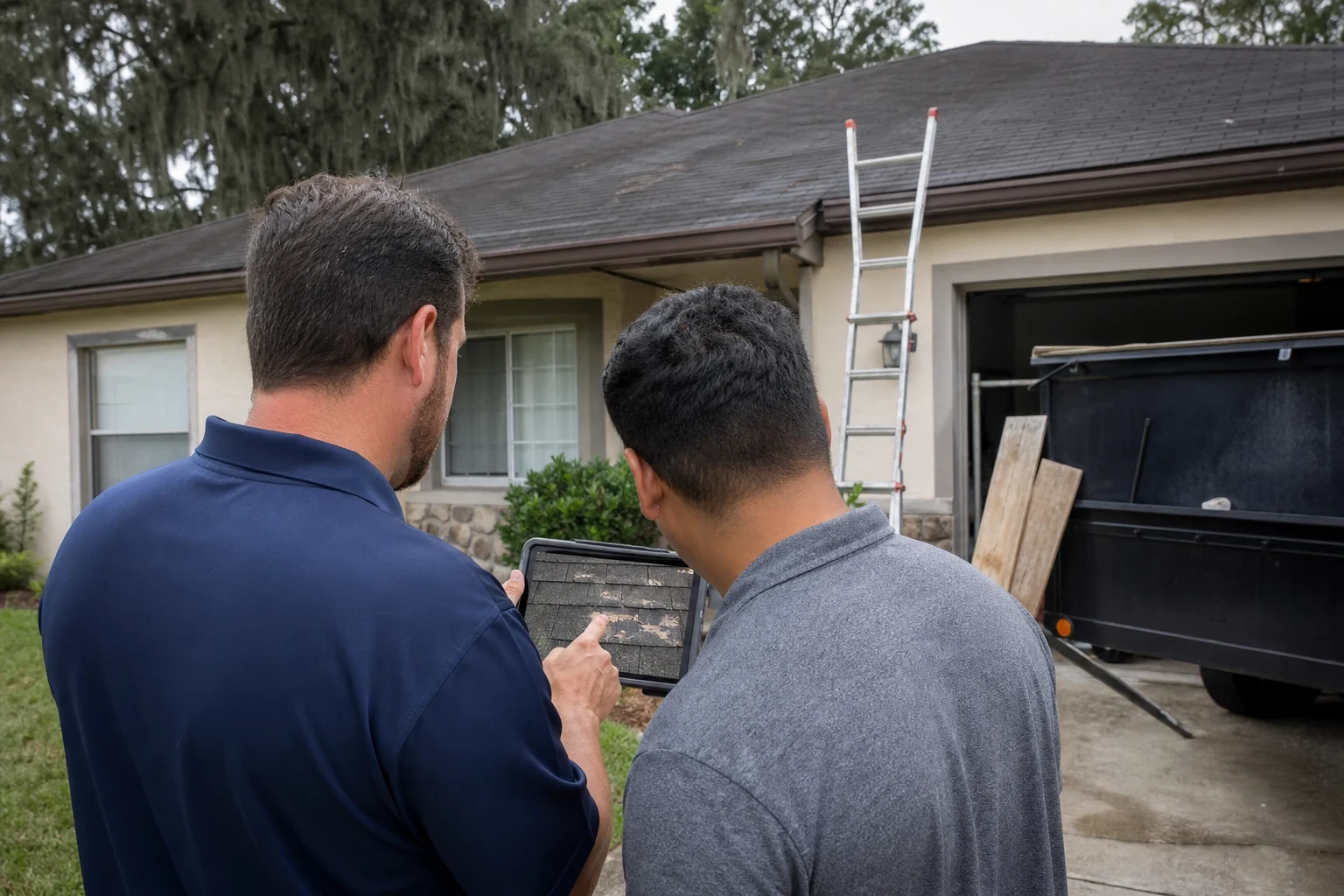
We check the roof and the attic, find the source and photograph it. Then we show you the pictures and explain what failed in plain words.
- 3
You get your options
We give you the repair price and say how long we expect it to last. If replacement makes more sense, we say that too. You pick.
- 4
We fix it and clean up
Most repairs take a day or less. We cover plants under the work area and haul off the old shingles. Then we drag a magnet bar across the grass and driveway so no stray nails end up in a tire or a bare foot.
Roof Repair Questions
Do I really need more than a fix over the leak?
Usually not. When the roof is in fair shape and the trouble is in one place, a proper repair does the job. We won't push a new roof you don't need. If the shingles are worn out across the board, we'll show you photos of why a small fix won't hold.
Will the new shingles match?
We start with the maker and color already on your roof and get as close as we can find. New shingles may look a shade brighter at first because the old ones have faded in the sun. That difference usually softens over time.
Why does my roof leak only in heavy rain?
Hard, wind-driven rain pushes water sideways under shingles and flashing. Light rain just runs off. That usually points to a lifted shingle, a loose flashing seam or a cracked boot, which are all repairable.
Is this storm damage or normal wear?
Sometimes it's hard to tell from the ground. We'll look and tell you what we think caused it. If it looks like storm damage, our storm damage repair page explains how we work with your insurance adjuster.
How soon should I fix a small leak?
Sooner is cheaper. A small leak keeps soaking the decking and insulation every time it rains. Waiting through a wet summer can turn a shingle fix into a decking job.
Get the Leak Found and Fixed
Tell us what you're seeing. We'll come out, show you the cause and give you a price in plain words before any work starts.