ServicesGutters
Gutters in Keystone Heights, Sized and Hung to Actually Drain
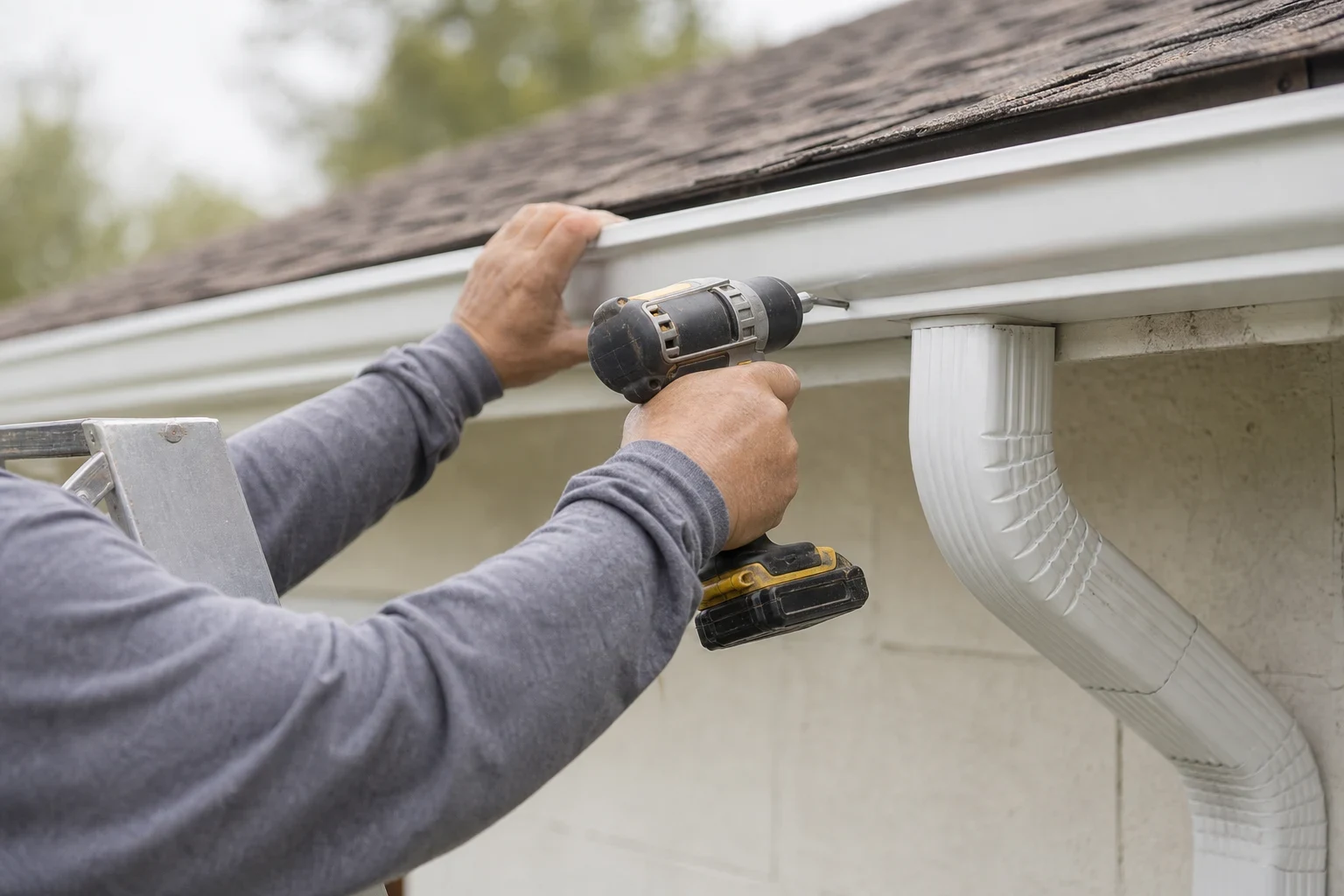
We install and replace gutters and downspouts for homes in and around Keystone Heights. We measure your roof, pick a size that can handle a hard summer storm, and show you where every downspout will go before anything goes up.
The Job a Gutter Does, and When It's Time to Replace
Gutters do just one thing. They collect the rain running off your roof and send it somewhere it can't do damage. When they work, the fascia stays dry, sand doesn't splash up on your walls, and the soil along the house stays put.
Around here, an afternoon storm can dump heavy rain in a matter of twenty minutes. Gutters that are undersized, sagging or sloped the wrong direction spill over, and then they aren't helping at all. A repair can sometimes solve it. With old gutters that have already been patched again and again, new ones often cost less in the long run.
We'll explain which route fits your home and the reason for it. If we notice the roof needs work too, we'll mention it, and our Roof Repair page has more on that.
What a Gutter Job Includes
- 01
A size picked from your roof's numbers
For each gutter, we work out how much roof drains into it and how steep that roof is. Big, steep slopes send water down quickly. With those figures we can tell if a standard 5-inch gutter will handle it or if 6-inch is the better choice.
- 02
Seam-free gutters formed in your driveway
Our forming machine comes to your home and shapes each gutter to the exact length from a roll of aluminum. With no joints along the run, there are far fewer spots that can leak. The only seams are at corners and end caps, and every one gets sealed.
- 03
The right slope and strong hangers
A gutter should fall gently toward its downspout, roughly a quarter inch over each ten feet. Hidden hangers go into the fascia close together, so a gutter loaded with rain stays straight.
- 04
Downspouts where the water can drain off
Each downspout is sized to its gutter and set where water can run away from the house. An extension or splash block moves it beyond the sandy ground along your foundation.
- 05
A look at the fascia and drip edge
A rain-filled gutter hangs its full weight on the fascia, so we check that board before anything else. We show you any spongy or rotted spots and you choose how to handle them. Being a GAF Certified Installer, we also see that the drip edge sits over the gutter so the roof drains the way it was designed to.
- 06
Old gutters hauled off, yard cleaned
We take the old gutters, fasteners and trimmings with us. Before leaving, we go over the yard for stray nails and scraps.
Questions about Gutters?
Call(904) 320-2386Signs Your Gutters Aren't Doing Their Job
Water spilling over the front
Rain pouring over the lip in a downpour usually traces back to one of a few things. The gutter may be too small for the roof, packed with debris, or tilted away from its outlet. We find the real cause before we suggest anything.
A dip or a gap at the fascia
Once a gutter bows in the middle, water sits there after every rain. That weight keeps working the hangers loose, so the low spot only gets deeper.
Trenches in the dirt below
A line of washed-out sand under the roof edge means water is falling straight down instead of going through the gutter.
Stains and peeling paint
Dark streaks on the fascia or peeling paint under the gutter point to leaks at seams or water running behind the gutter.
Pine straw that never clears
If you're up a ladder every few weeks pulling needles and oak leaves out, it may be time to talk about bigger downspouts or a gutter guard.
How the Work Goes
- 1
The call and the visit
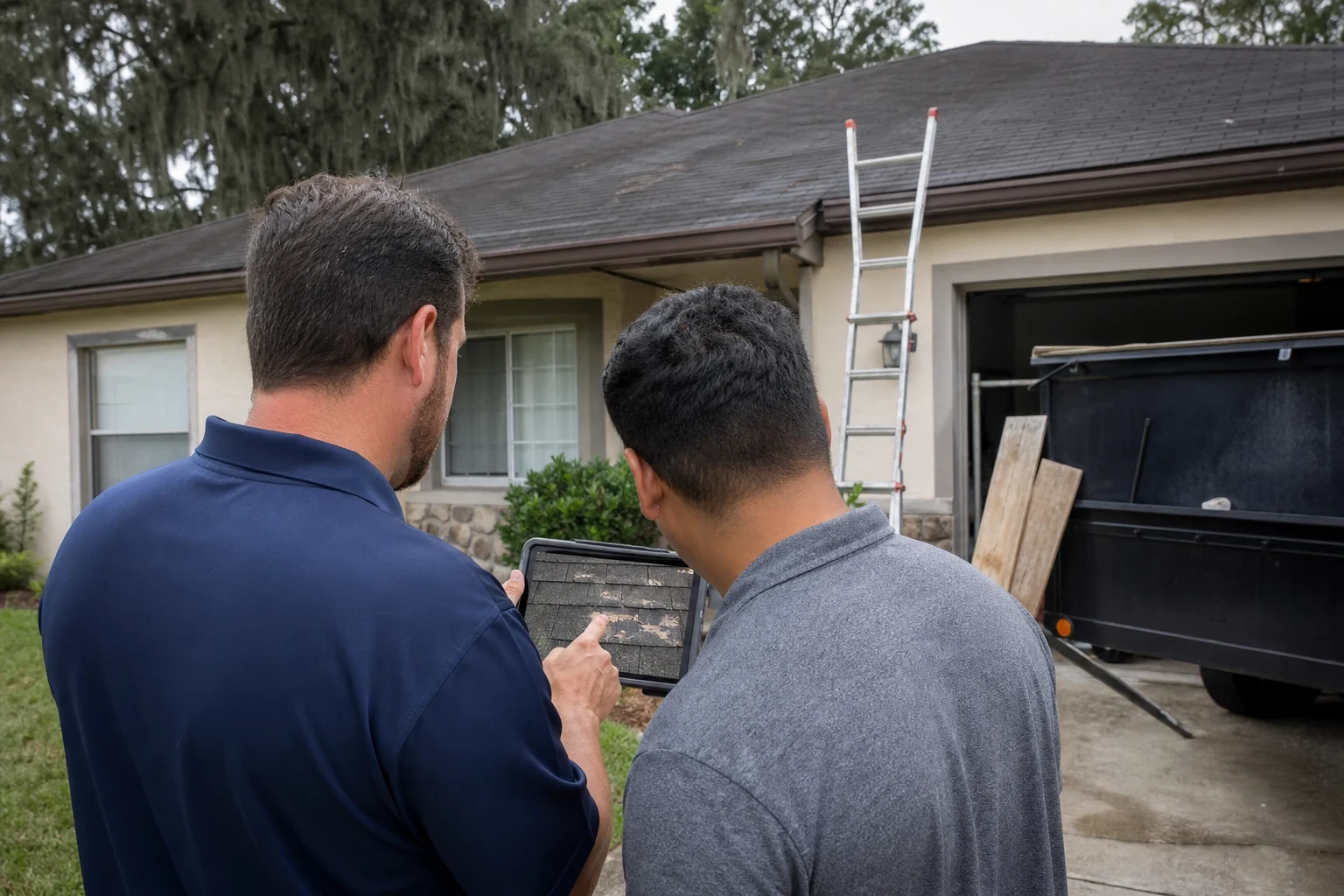
You call, and we pick a time to come out. We measure every gutter line, press on the fascia boards for soft spots and look for puddles or washouts around the yard.
- 2
Your options in plain words
We go over gutter size, downspout count and where each one drains. If a guard makes sense for your trees, we explain how it works and what it won't do. You get the price before we schedule anything.
- 3
Install day
Most homes take one day. We take down the old gutters, fix up the hanging line, form the new gutters on site, hang them and run the downspouts.
- 4
Water test and walk-through
We run a hose in the gutters to check that water flows to the outlets and nothing drips at the corners. Then we walk around your home with you and show you what was done.
What Moves the Price of Gutters
Gutters are priced mostly by the foot, but a few things push the number up or down. We'll point each one out on your home so the estimate makes sense. Financing is available if you'd rather spread the cost out.
- Total length and corners
- More linear feet means more material and labor. Each inside or outside corner adds a little, since it has to be cut and sealed.
- Bigger gutters and outlets
- Stepping up from 5-inch to 6-inch uses more aluminum in every foot, and wider downspouts add a bit too. On a large or steep roof, that extra room for water usually earns its keep.
- Second stories and tricky spots
- Gutters along a tall wall, above a pool cage or over sloped ground need longer ladders and more care to set up safely. That extra time shows up in the labor.
- Fascia condition
- If the wood behind the gutter is rotted, it should be dealt with first. We'll show you the soft spots before you decide.
- Guards and extras
- Gutter guards, extra downspouts and underground drain lines all add to the job. We only suggest them when your yard and trees call for them.
Gutter Questions We Hear
Can you just repair my gutters instead of replacing them?
Often, yes. A loose hanger, a leaky end cap or a clogged downspout is a small fix. If the gutters are sagging in several places, rusted through or simply too small for the roof, patching won't keep up and we'll tell you that plainly.
Do I need 5-inch or 6-inch gutters?
That comes down to the size and slope of the roof area feeding each gutter. Plenty of homes do fine with 5-inch. Big or steep roofs, and long runs with only one or two downspouts, usually need 6-inch to keep up with heavy summer rain.
Are gutter guards worth it?
They help most when you have pine or oak trees right over the roof. They cut down on cleaning but don't end it, since fine debris still builds up on top. We'll tell you honestly whether your trees make them worth the cost.
Will new gutters affect my roof?
They shouldn't, if they're hung right. The gutter has to sit under the drip edge so water from the shingles lands inside it. If we see roof problems while we're up there, we'll show you photos, and you can decide whether to have a roof inspection.
How long does the job take?
Most gutter installs are done in a single day. Larger homes or jobs that need fascia work first can take a bit longer, and we'll tell you that up front.

Get Your Gutters Looked At
We'll come measure, check the boards behind the gutters and show you where the water should go. You'll know the size, the layout and the price before you decide anything.